Course Content
Core courses

Principles of Environmental Management
The course involves the studying of ecosystems and its relationship with atmospheric, hydrological and geomorphological systems. The impacts of human activities on the delicate balance of ecosystems, as well as the ethical basis of conservation biology will also be examined. The course introduces the basic principles of environmental management, illustrates scientific principles by building on worldwide and well-known examples, and encourages students to become personally involved in solving environmental problems.

Management of Public Health Risks
This course focuses on understanding the range, limitations and impacts of public health policies. It also trains students to develop skills to identify the principal factors that are imposing impacts on humans and other environmental species and to assess the significance of emerging issues in an objective manner.
Elective courses

Sustainable Management Systems
The course focuses on different management approaches to sustainability from global to organizational preparation. Focus will be given to the World Summit on sustainable development, environmental impact assessment process to encourage the consideration of the environment in development plan and decision making by the local government, and the establishment and implementation of environmental management system (EMS) within organization to reduce their environmental impact.

Land and Water Resources Management
The course provides background information on water, soil and vegetation, as well as the effects of industrial and economic development on land quality and water safety. Different strategies on land and water resources management for sustainable development are also discussed.
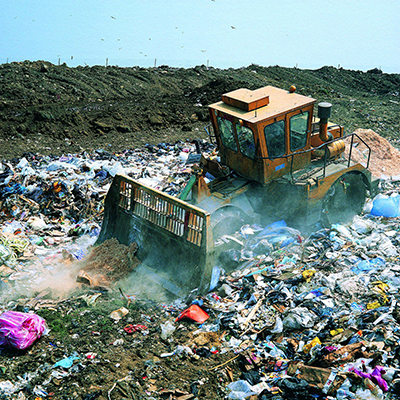
Integrated Waste Management
The amount of waste/solid waste produced everyday is considerable and ways of properly handling and permanently disposing of them have always been in demand. The course explores and compares different options for the reducing, handling, and treating of solid waste.

Environmental Monitoring, Assessment, Research and Reporting
The course focuses on different approaches and methods to conduct environmental and public health research, including environmental monitoring. Basic principles of these research and monitoring methods will be dealt with adequately so that students will be able to formulate their own research or monitoring strategies to handle new environmental and public health problems when they have completed the course.

Food Quality, Law and Safety Management
The course is designed to introduce students to the growing consumer demand in food safety and increase their knowledge of the food industry, in particular, awareness in the importance of maintaining high food quality. This course covers the principles and international standards of food quality and safety management, and provides an understanding of the legislative controls related to food quality, safety and human health protection in Hong Kong, China.

Occupational Health and Safety Management
This course provides an understanding on occupational health and safety with due emphasis on a variety of commonly adopted management approaches and methods. This includes the identification procedures for the principal causes of ill health and poor safety at the workplace, and strategies for eliminating or ameliorating them. The legal and operational aspects of occupational health and safety are also adequately covered within this course.

Carbon and Energy Management
This course provides students with an understanding on carbon and energy management with due emphasis on a variety of commonly adopted management approaches and methods. This includes carbon accounting or the identification and quantification of greenhouse gas emission sources and sinks, carbon footprinting of products and services, carbon neutrality, energy audit and management, measurement and verification of energy performance projects, and the related carbon and energy standards.
Applied AI Tools and Agents for Sustainability & Public Health Management
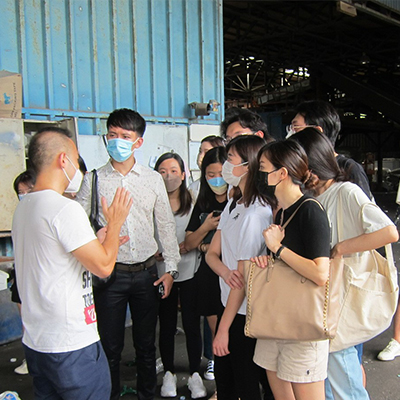
This course strengthens students’ understanding of global, regional, and local sustainability and public health challenges and builds their ability to evaluate, apply, and govern AI tools and agents in sustainability and public health management contexts — without requiring programming or engineering backgrounds. Students will identify a challenge in the environmental or public health field and propose innovative, practical, and AI solutions, progressing from desktop research to final presentations. Through guest lectures, site visits, and engagement with industrial professionals, students will deepen their understanding of real-word sustainability issues and co-design feasible solutions. The course emphasizes ethics, equity, data governance, and responsible AI as essential competencies for public-facing management roles — not optional add-ons. Students will produce a team-based AI adoption proposal, moving from problem definition to implementation roadmap and professional presentation.
Multiple professional certifications

BEAM Affiliate
This programme is accredited for direct application to the BEAM Affiliate qualification.
Hong Kong Institution of Certified Auditors (HKICA)
Registered Food Safety Management System Auditor
Graduates who have completed EPHM7330 Food Quality, Law and Safety Management meet the requirements for regisration as “Registered Food Safety Management System Auditor” of the Hong Kong Institution of Certified Auditors (HKICA)
Registered GHG Carbon Auditor
Graduates who have completed EPHM7340 Carbon and Energy Management meet the requirements for registration as a “Registered GHG Carbon Auditor” of the Hong Kong Institution of Certified Auditors (HKICA)